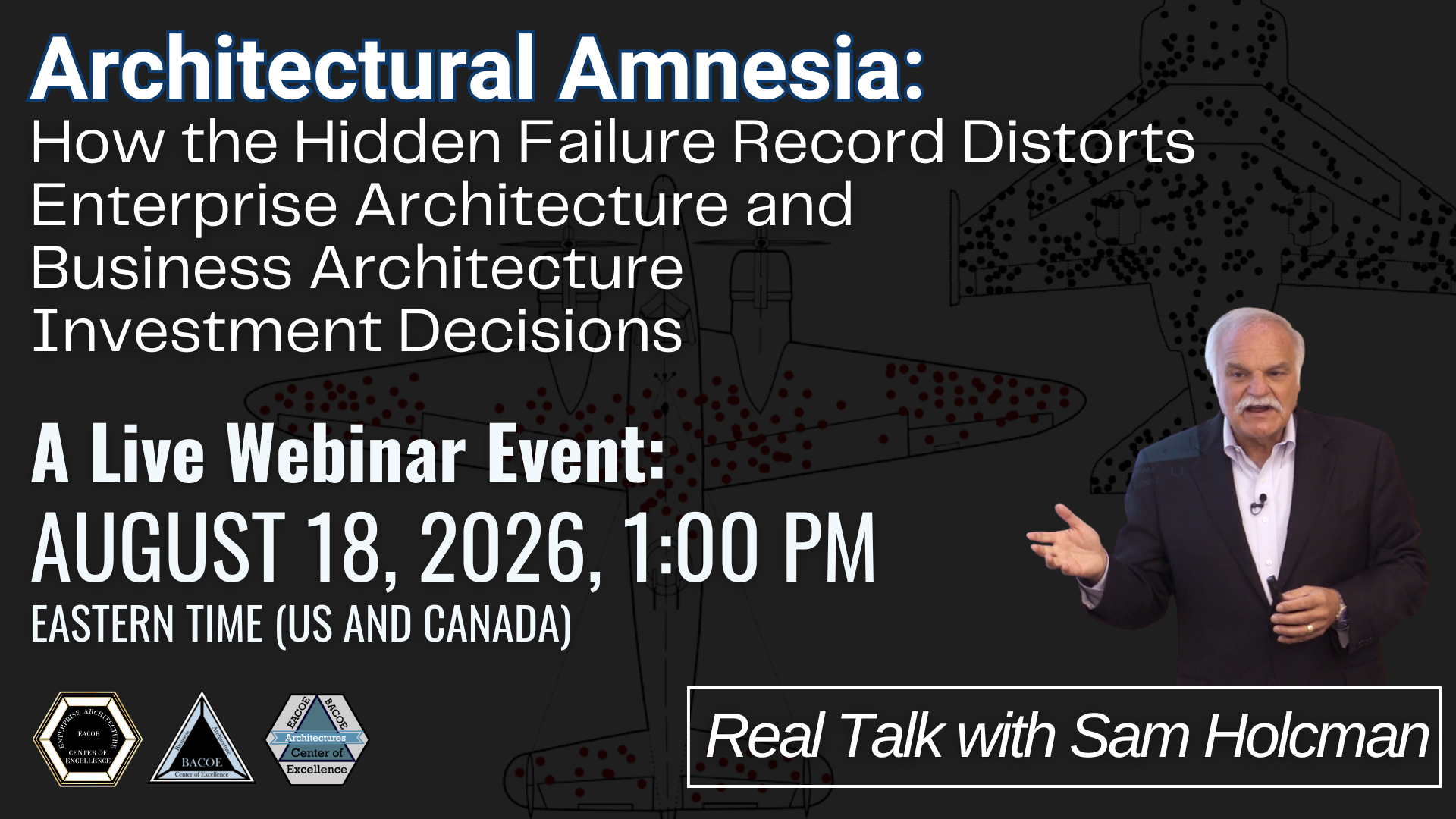
Architectural Amnesia:
How the Hidden Failure Record Distorts Enterprise Architecture and Business Architecture Investment Decisions
Join Live · August 18, 2026 · 1:00 PM EDT
Secure Your Seat For The Live Broadcast
Get the full research report sent to your email when you sign up for the webinar
Core Thesis:
Architectural amnesia — the loss of the hidden failure record — means that every Enterprise Architecture and Business Architecture roadmap built only from successful implementations is equivalent to Abraham Wald's military analysts reinforcing the parts of aircraft that were already surviving, while missing entirely the lethal damage visible only in the planes that never returned.
The absent data is not missing; it is the most important signal in the portfolio. AMIF™ restores it.
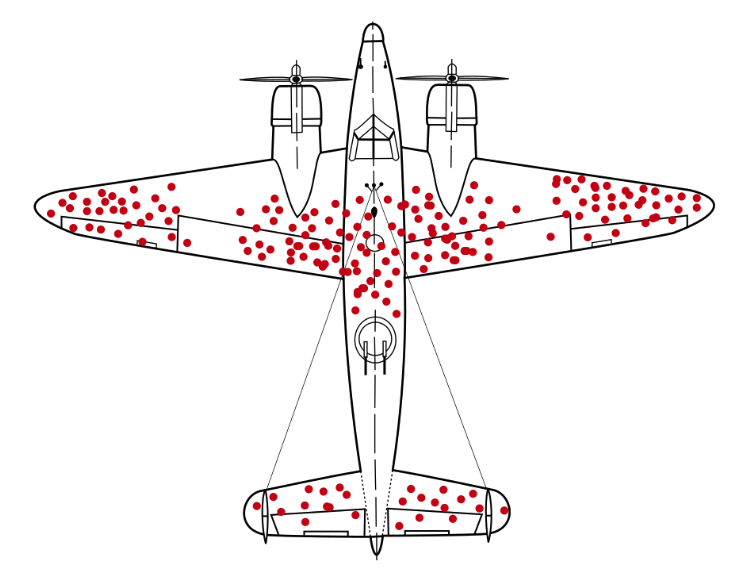
Source: A modern visual re-creation of Abraham Wald's 1943 reports. https://apps.dtic.mil/sti/pdfs/ADA091073.pdf
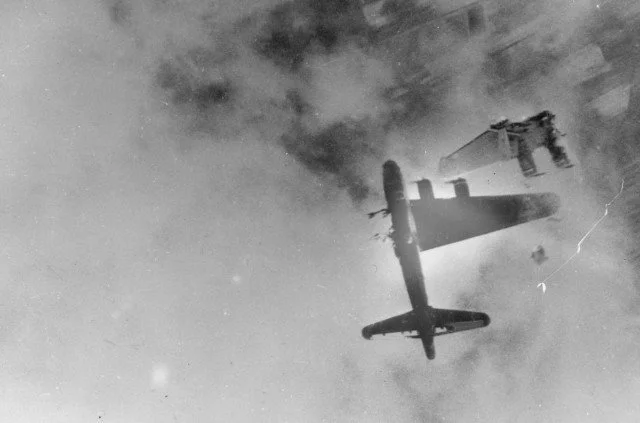
Source: Wee-Willie. Boeing B-17G Wee-Willie 42-31333 LG-W, 323th squadron of 91st bombing group, lost over Kranenburg, Germany. www.ilovewwiiplanes.com
Executive Summary
Enterprise Architecture and Business Architecture functions are systematically distorted by survivorship bias — the logical error of studying only the systems, initiatives, and programs that succeeded while treating the far larger population of failures as invisible background noise.
This webinar and supplementary reports audit that distortion, quantifies its structural impact across three critical domains, and introduces the Architectural Memory Integration Framework (AMIF™) as a structured methodology for correcting it.
The consequences are severe and compounding.
An Enterprise Architecture or Business Architecture function operating only on surviving evidence produces investment risk assessments that understate actual failure probability, resource allocation models built on anomalous success conditions, and talent development curricula that train architects on the exceptions rather than the rule. The organization that cannot see its failures cannot learn from them — and cannot protect future investments from repeating the same hidden patterns.
~1/3
of enterprise architecture and business architecture programs eventually abandoned or disbanded (Mark Richards, 2021)
70%+
of large-scale enterprise architecture & digital transformation initiatives fail to meet stated objectives (BCG, 2021)
$2.5T
annual global project failure losses across technology portfolios (PMI, 2023)
Join this live session to discover why your Enterprise Architecture and Business Architecture roadmap is quietly built on the handful of projects that survived, and how to recover the failure record that would have told you the truth.
What You'll Discover:
How architectural amnesia takes hold
See the exact mechanisms that erase failed initiatives from your evidence base, and why the planes that never returned, not the ones that did, carry the signal you actually need (the Abraham Wald problem, applied to architecture).
What the full-population record actually shows.
Confront the numbers most roadmaps never account for, including a 70%+ failure rate on large-scale initiatives and roughly a third of programs eventually abandoned, and what those rates mean for how you allocate the next dollar.
Where the distortion does its damage.
Walk through the three domains it silently warps: investment risk assessments that understate real failure probability, resource models tuned to lucky conditions, and talent programs that train architects on the exceptions instead of the rule.
How AMIF™ corrects it.
Get a first look at the Architectural Memory Integration Framework, a structured method for pulling non-surviving data back into your road mapping so decisions reflect the whole picture, not just the winners.
This webinar and supplemental report address three structural questions:
#1: How does architectural amnesia — the systematic loss of the hidden failure record — enter Enterprise Architecture and Business Architecture practice, and through which specific structural mechanisms does it operate?
#2: In what measurable ways does it skew investment risk assessment, resource allocation, and talent development — and what is the quantifiable cost of those distortions?
#3: What framework can practitioners use to incorporate non-surviving data points into enterprise architecture and business architecture road mapping in a way that reflects the full reality of organizational performance?
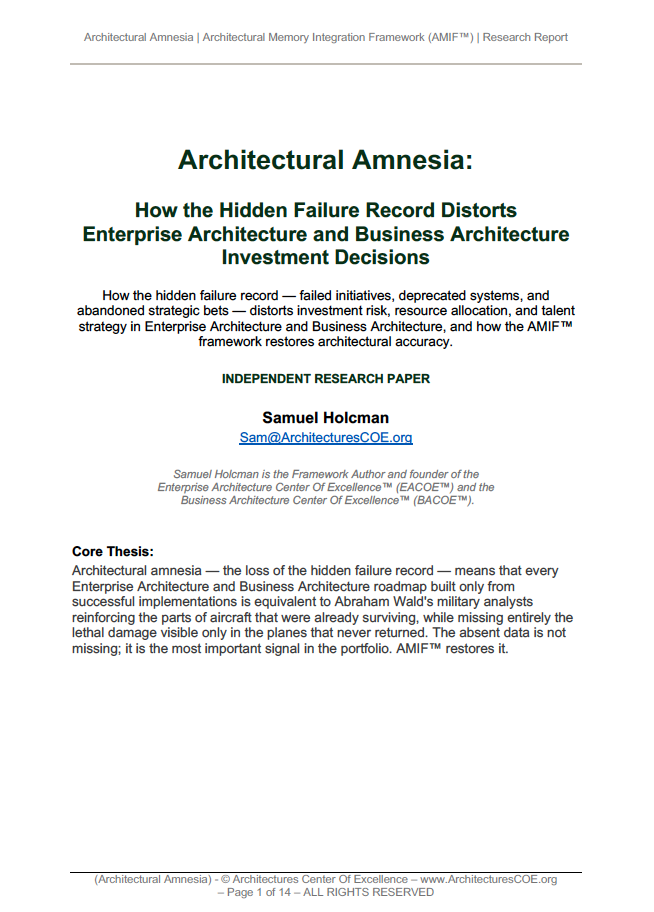
SAMUEL B. (Sam) HOLCMAN is the Chairman of the Architectures Center Of Excellence, the Managing Director of the Enterprise Architecture Center Of Excellence (EACOE), and the Business Architecture Center Of Excellence (BACOE), and the President of the Zachman Institute for Framework Advancement (ZIFA). He is considered the practitioners practitioner in Enterprise Architecture and Business Architecture, and the leading implementer and world-wide educator and trainer in Enterprise Architecture and Business Architecture methodologies and techniques.
The Architecture Center Of Excellence (ACOE) provide its clients with innovative, yet practical solutions to a range of business and systems related challenges and activities. He was the Vice President of Modelware, Methodologies, and BPE (Business Process Engineering) for a major software company. Prior to this experience, Mr. Holcman was the Founder and President of Computer and Engineering Consultants, Ltd. His interests include consulting and research on topics such as enabling business strategies, enterprise architecture, business architecture, business process engineering, intellectual capital management, organization development, system methodologies and life cycles, corporate business modeling, and accelerated analysis techniques.
About The Speaker:
Samuel Holcman Biography
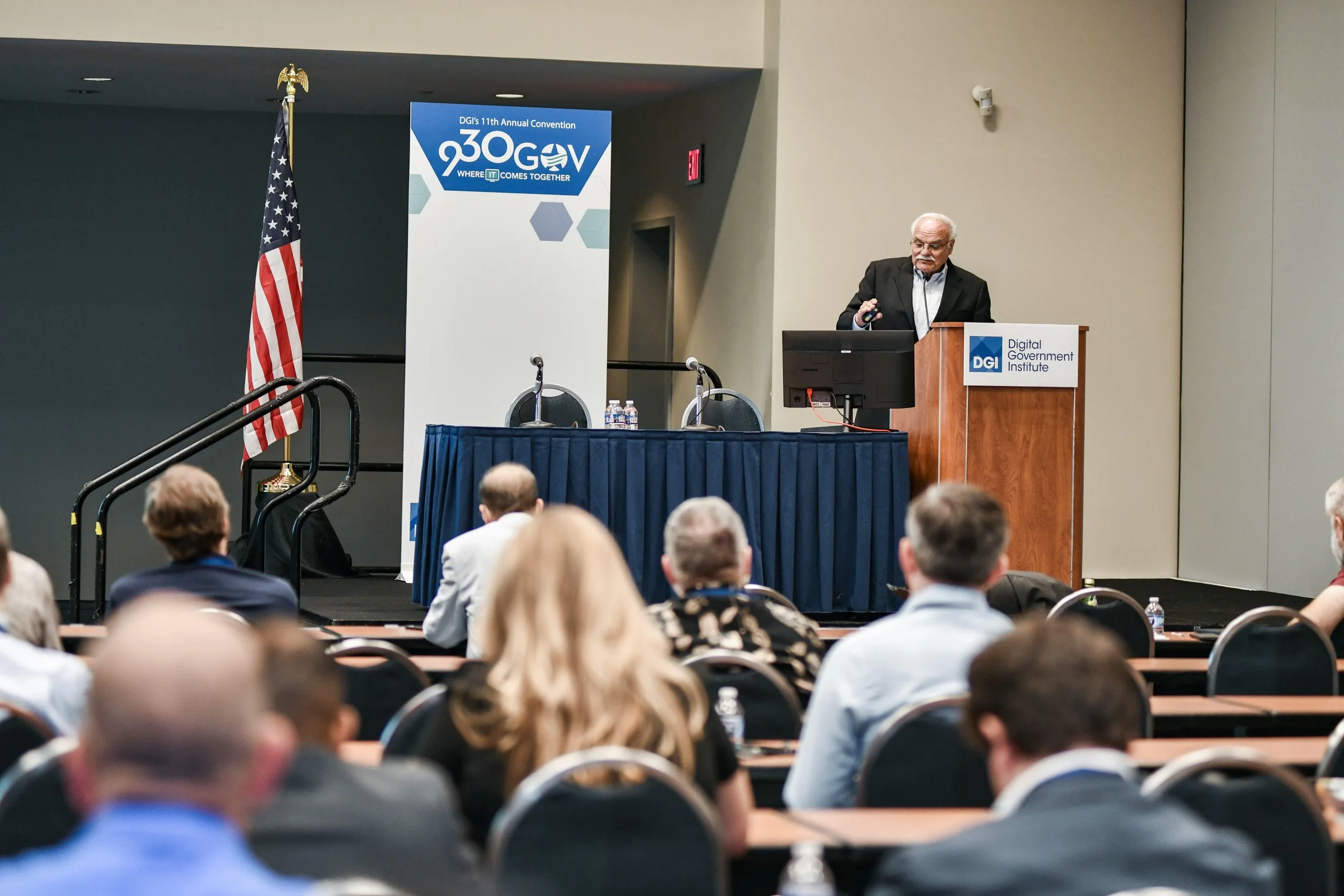
He published the book titled “Reaching the Pinnacle – a Methodology of Business Understanding, Technology Planning, and Change” and “Enterprise Architecture – A Pragmatic Guide of Practitioners and Stakeholders”. These books bring a method to the marketing madness that surrounds Enterprise Architecture, and its straightforward and no-nonsense style sheds much light on a poorly understood topic. The book helps business executives and technology professionals through the process of building an Enterprise Architecture appropriate to their organization’s needs. Mr. Holcman published the book titled “Business Architecture, The enabler of Business Strategy”. Holcman presents a no-nonsense, direct, and easy-to-follow approach to Business Architecture. This makes it particularly useful for those looking for actionable insights. The book is described as "a book of action, not surveys or choices – moving from theory to strategy enablement". This practical orientation can be valuable for new architects or professionals seeking to apply Business Architecture concepts in real-world scenarios. It provides a thorough treatment of Business Architecture, covering topics from establishing and maturing a Business Architecture practice to actually developing a human-consumable Business Architecture. The Business Architecture process presented is both theoretically sound and refined through actual practice. The methodologies have been tested and proven in real business environments.
Holcman emphasizes that Business Architecture helps the business run better, rather than "architecture for architecture's sake". This aligns well with the needs of business professionals looking to improve their organizations. This book helps organizations move from Strategic Intent to a Business Strategy to Strategy Enablement. The book provides clear, understandable approaches, making it suitable for a wide audience, from business professionals, strategists, and new or practiced Business Architects. The book emphasizes the role of Business Architecture in strategy execution, which may be particularly relevant for those interested in aligning business strategies with technology enablement.
Sam hosts a podcast and webinar broadcast titled Real Talk with Sam Holcman. These broadcasts are about sorting through the internet-driven advice madness that exists in business today, and provide practice-based insights in business transformation, organizational transformation, enterprise architecture, business architecture, and technology transformation, based on real world practices.
Mr. Holcman conceptualized and constructed a unique look at system development methodologies, which resulted in the highly regarded ForeSight TM methodology and methodology management product.
He has developed a strategic planning process that is used by many Fortune 500 companies and is the co-developer of the widely used accelerated analysis (JAD-like) technique known as Rapid Analysis. He has also developed an innovative approach to Business Process Re-Engineering known as Business Process Visualization TM and Organization Network Analysis TM.
These techniques are being used to Unlock the Hidden Assets in your Organization SM.
In association with Mr. John Zachman, he formed The Zachman Institute for Framework Advancement (ZIFA), to explore, explain, and share the concepts of enterprise architecture. Sam has also focused on understanding the value and management of Intellectual Capital to enterprises. He has developed the Intellectual Capital Maturity Model TM to provide guidance on how effectively organizations are managing their Intellectual Capital, and steps they can take to more effectively manage this capital, and the Enterprise Architecture Maturity Model, and the Business Architecture Maturity Model, to provide guidance to organizations seeking to improve their understanding and implementation of Enterprise Architecture and Business Architecture concepts.
He has developed and published works on Cooperatively Optimized Relationships (COR), which is the next generation of understandings in the field of Customer Relationship Management (CRM). To better understand an organizations “DNA”, Sam led the development of The Enterprise Framework TM and The Business Architecture Framework TM. Both have received worldwide acclaim for their understandability, and usability, while maintaining theoretical purity.
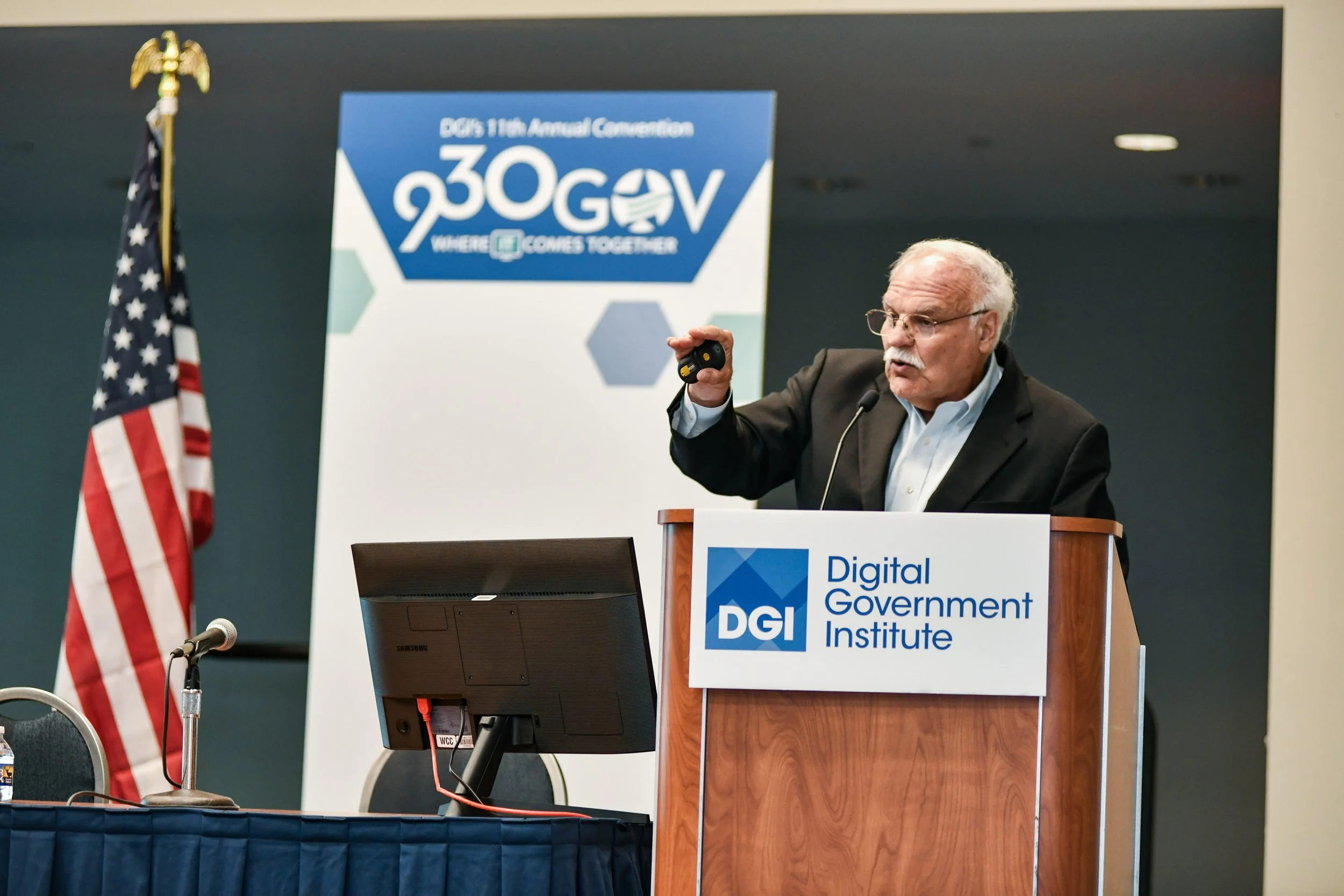
Sam was with Ford Motor Company in data processing, finance, and engineering. He was Vice President of a robotics and factory automation firm. He was also a senior member of a technology delegation to the People’s Republic of China, on the invitation of the Chinese and United States Government, and a member of a technology delegation to the Commonwealth of Independent States (Soviet Union).
Sam has a Bachelor’s degree in Bioengineering and Master’s degree in Electrical Engineering, and a Master’s in Business Administration from the University of Michigan, Ann Arbor. He has been elected to Eta Kappa Nu (electrical engineering honors society), and Tau Beta Pi (engineering honors society), and is a member of numerous societies and professional organizations, and is a frequent speaker at seminars around the world.
Architectures Center Of Excellence (EACOE)
- Copyright © 2026 - All Rights Reserved.